Most businesses think growth comes from more traffic.
More ads. More clicks. More visitors. But what if the real problem is not traffic, but what happens after someone lands on your website?
This is where conversion rate optimization (CRO) changes everything.
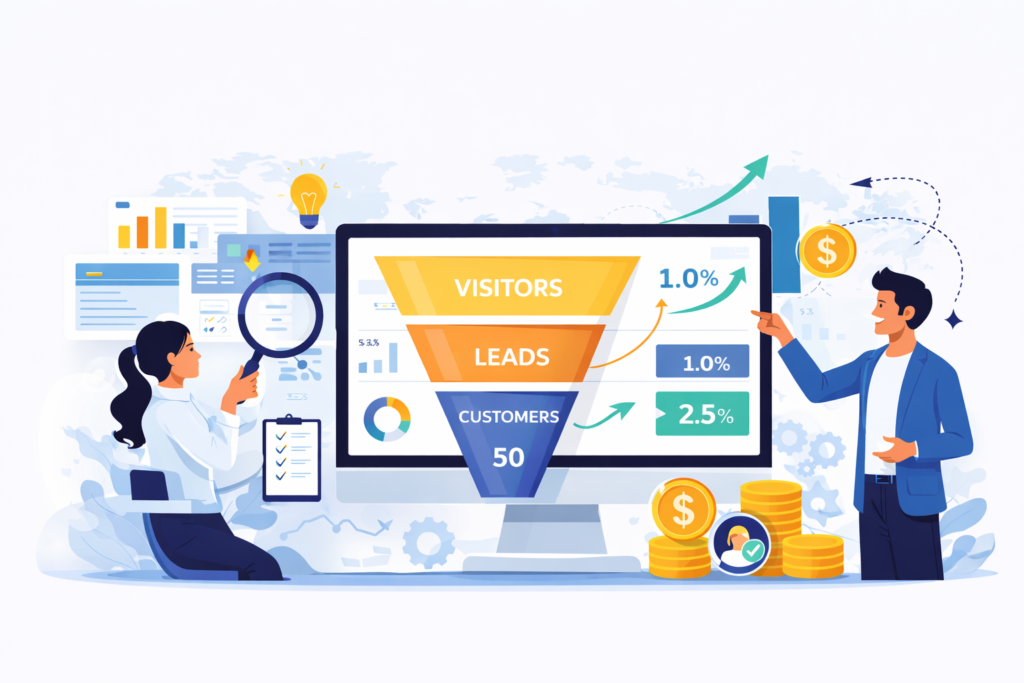
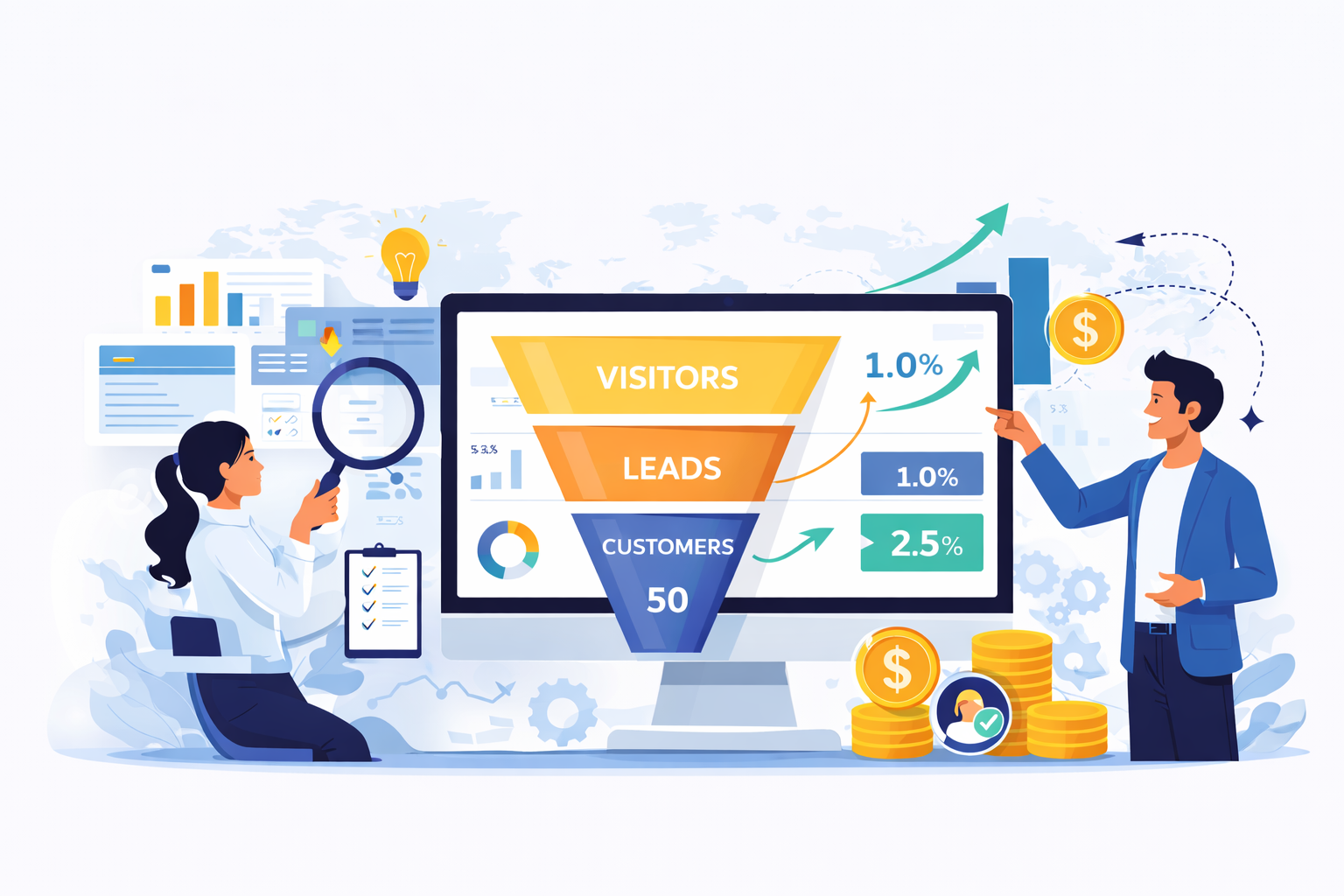
Instead of spending more money to bring people in, CRO focuses on turning your existing visitors into leads and customers. It is one of the most effective ways to improve performance without increasing your marketing budget.
Conversion rate optimization is the process of improving your website or landing pages to increase the percentage of users who take action.
That action could be:
It is not about redesigning your entire website. It is about understanding user behavior and making strategic improvements that remove friction and increase clarity. Even small changes can have a significant impact when done correctly.
The reason is simple.
CRO is not as visible as running ads or posting on social media. It does not give instant gratification. It requires analysis, testing, and patience.
So businesses focus on traffic instead.
They increase ad spend, launch new campaigns, and try different platforms. But if the website is not optimized, those efforts do not translate into better results.
This leads to a cycle of spending more without improving performance.
Letu2019s say you are running PPC campaigns and getting good traffic.
If your conversion rate is low, you are losing potential customers every day.
For example, improving your conversion rate from 2% to 4% effectively doubles your results without increasing your ad spend. That is the power of CRO.
Without it, you are constantly paying more to achieve the same outcome.
Many websites fail not because of design, but because of poor user experience and unclear messaging.
Some of the most common issues include:
Confusing headlines that do not explain the value clearly.
Slow loading pages that make users leave before they even see the content.
Too many distractions that take attention away from the main action.
Weak or unclear calls to action.
Lack of trust signals like testimonials, reviews, or proof.
These issues might seem small individually, but together they significantly impact conversions.
If you are investing in Google Ads or Meta Ads, CRO becomes even more important. Paid traffic is expensive. Every click costs money.
If your landing page is not optimized, you are essentially paying for visitors who do not convert. By improving your conversion rate, you reduce your cost per acquisition and increase your return on ad spend. This makes your campaigns more profitable and easier to scale. In simple terms, CRO makes your ads work better.
CRO is not based on guesswork. It relies on data.
Understanding how users interact with your website helps identify where they drop off and why they do not convert. Tools like heatmaps, session recordings, and analytics provide insights into user behavior.
Once you have this data, you can make informed changes instead of random decisions. This is what makes CRO a structured and reliable growth strategy.
One of the core principles of CRO is testing. You do not assume what will work. You test different versions and let data decide.
This could involve testing:
Different headlines
Call to action buttons
Page layouts
Form lengths
Over time, these tests reveal patterns. You start to understand what resonates with your audience and what does not.This continuous improvement leads to better performance and higher conversions.
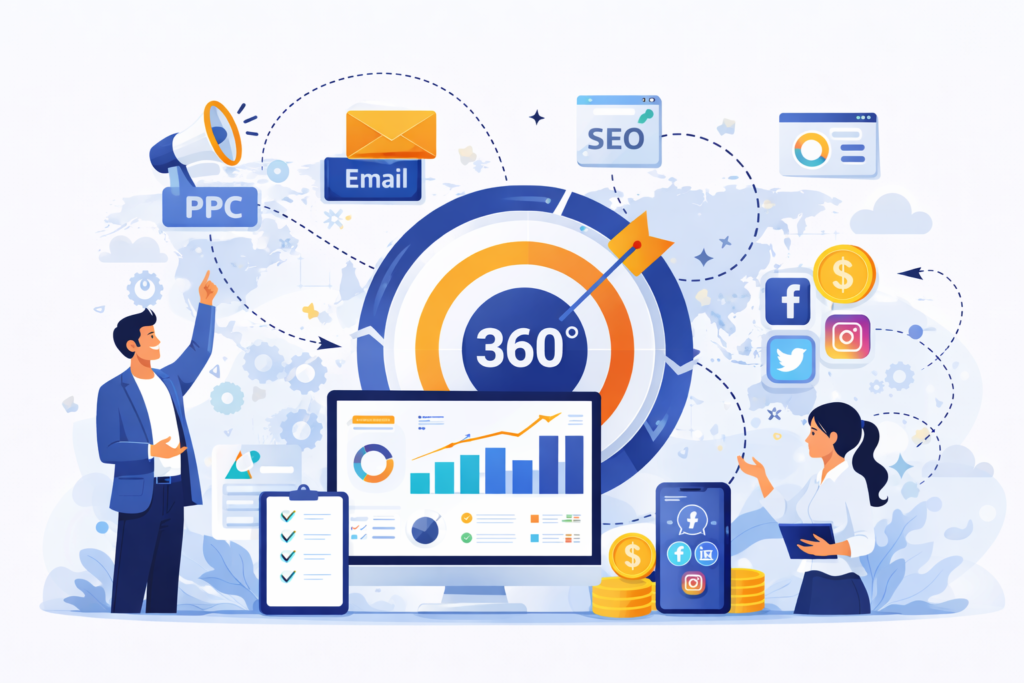
Whether your traffic comes from SEO, paid ads, email marketing, or social media, CRO plays a role. It ensures that every visitor has a higher chance of converting.
Instead of relying on one channel, CRO strengthens your entire marketing ecosystem. It connects your efforts and makes them more efficient.
Unlike ads, which stop delivering results when you stop spending, CRO improvements continue to benefit your business over time.
Once your website is optimized, every new visitor has a better experience and a higher chance of converting.
This creates a compounding effect.
Better conversions lead to more revenue, which allows you to reinvest and grow further.
If your marketing is not delivering the results you expect, the problem might not be traffic. It might be conversion.
Instead of increasing your budget, focus on improving how your website performs. Identify where users drop off, fix the gaps, and optimize the experience.
Conversion rate optimization is not about quick fixes. It is about building a system that consistently turns visitors into customers.
When done right, it becomes one of the most powerful tools for sustainable growth.
We are one of the best Performance & in India Marketingu00a0 Companies in Kolkata that aims to grow your business successfully by increasing the conversions to reach your goals.